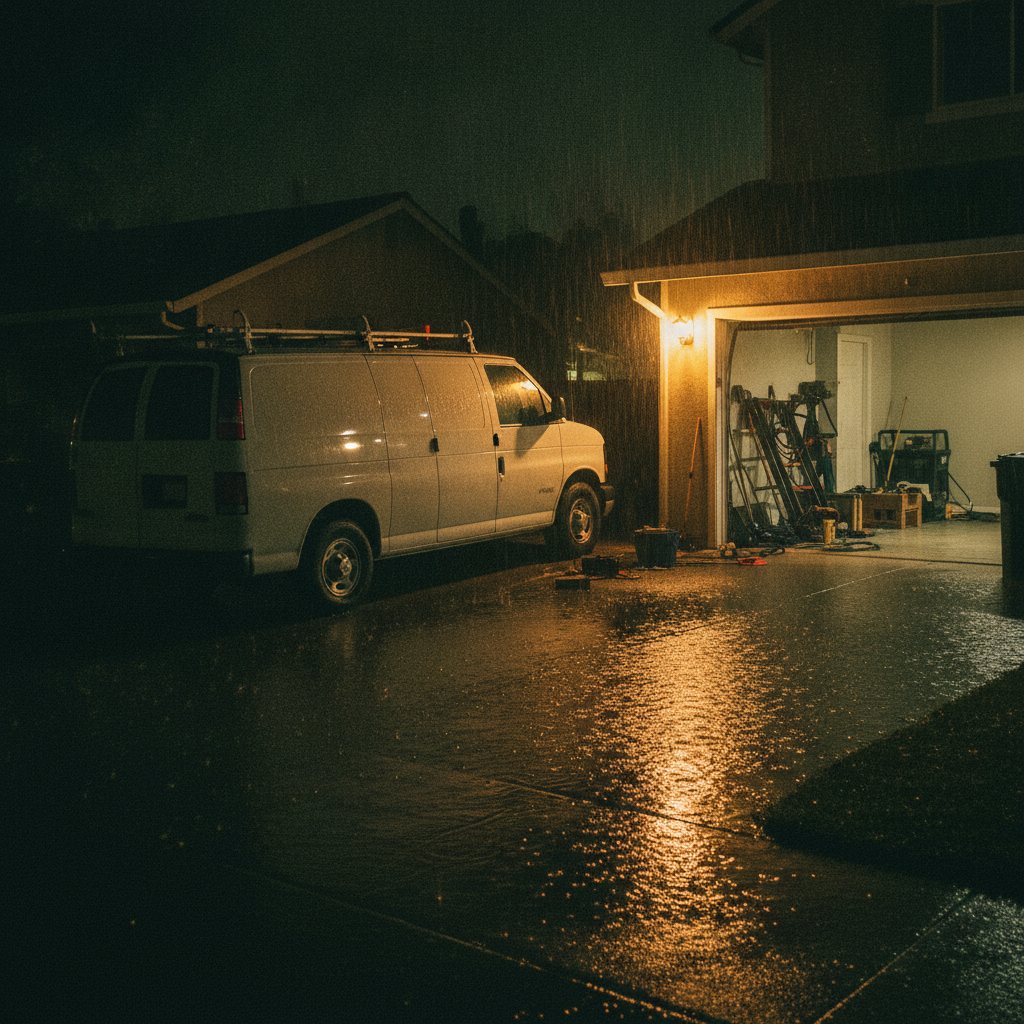
It is 10:14 on a Tuesday night. A homeowner in Elk Grove hits the button and nothing happens. The spring snapped. Her car is inside, she has a 6 AM shift, and she is already searching "garage door emergency Sacramento" on her phone.
She calls the first result. Voicemail.
She calls the second. Same.
The third one answers in seconds. That operator books the job before she hangs up.
If you run a garage-door shop in Sacramento, you already know this dynamic exists. The question is which side of it you are on.
The Calls That Come After You Stop Answering
Most garage-door jobs do not happen between 9 and 5. Springs break when people use them most, early morning before work and late evening when they get home. A broken spring at 7 AM is an emergency. A door that will not close at 11 PM is an emergency. These are the calls with the highest urgency and, often, the least price resistance.
A homeowner who cannot get her car out before a morning commute is not shopping around. She is calling until someone answers.
Industry research consistently shows that fewer than two in ten callers will leave a voicemail and wait. The rest move to the next listing. In a market like Sacramento, where Elk Grove, Roseville, and Rancho Cordova each have their own cluster of operators, "the next listing" is not a hypothetical. It is a competitor who is about to collect your job.
Why a Solo Operator Cannot Just "Answer More"
Here is the trap most one-truck garage-door operators fall into. They know they are missing after-hours calls, so they try to stay available longer. They answer the phone on the way home from a job. They answer at dinner. They answer at 11 PM.
That works for a while. Then they burn out, or they miss a call anyway because they were under a door with both hands full, or they answer exhausted and fumble the booking.
The math is unforgiving. A single spring replacement in Sacramento runs $200 to $350. A panel replacement or full opener job can be $600 or more. If you are missing three or four after-hours calls a week, that is real money leaving the market every month and landing with whoever did answer.
You cannot out-hustle the phone indefinitely. The operators who grow past two trucks usually stop trying.
What Catching the Call Actually Looks Like
When a homeowner in Citrus Heights calls your number at 10 PM and an agent answers in seconds, a few things happen that would not happen with voicemail.
The agent asks the right questions: what kind of door, what the symptom is, whether the car is trapped. It gathers enough to give an honest window and a ballpark, or flags the job as something you want to price yourself. Either way it books a time and texts the homeowner a confirmation.
You get a text too. Job details, contact, address. You look at it in the morning, or that night if you run emergency calls.
The homeowner does not call your competitor. She already has a confirmation.
That is the whole mechanism. No scripts to memorize, no junior staffer to train. The phone is covered.
"The job goes to whoever answers. After hours, that used to mean whoever was least tired. Now it means whoever set up their phone right."
The Honest Part
An after-hours answering agent is not magic. It cannot diagnose a broken spring by sound, and it cannot give a firm quote on a job it has not seen. If a caller has a complex situation and wants a human technician on the phone to walk her through it, she will know she is talking to an agent.
Most callers, at 10 PM with a trapped car, do not want a fifteen-minute technical consultation. They want to know someone is coming and when. That is what the agent delivers.
If your jobs are mostly complex commercial installs where the caller needs deep technical back-and-forth before booking, this might not move the needle for you. But if you run residential service calls in Sacramento, the math is straightforward: missed after-hours call times your average ticket equals what you are leaving on the table each week.
You can run that number at totalapptitude.com/missed-call-math. Use your own jobs and your own ticket size.
What Getting Started Looks Like
Total Apptitude offers three plans: Launch at $397 a month, Scale at $597, and Dominate at $897, each with a one-time setup fee. The 30-Day Capture Guarantee covers your first month: catch at least 3 calls you would have missed in your first 30 days, or you pay nothing, the month and the setup both refunded.
The Sacramento garage-door market is not going to get less competitive. The operators booking the late calls are going to keep booking them. The only variable is whether one of those operators is you.
If you want to see how the agent handles a real garage-door call before you commit to anything, book a discovery call and we will walk through it live. No slide decks, just the actual thing working.
Do not lose the calls you cannot get to.
Talk to a real person. We will tell you straight what your phone is costing you, and whether we can help.
Talk to a real person →